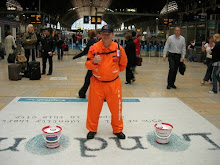
i am a volunteer collector for Londons Air Ambulance (HEMS)
WHERE DO MAGIC BALLOONS AND MAGIC SHOW TO HELP COLLECT KEEP THEM IN THE SKY
AND LOOKING FOR OTHER AIR AMBULANCE CHARTIES HELP COLLECT BECOME A TEAM MEMBER
THAT HAS HELP THE SAVE LIFES BY DOING SO.
IF THERE IS ANY LIFE SAVING CHARITYS THAT WOULD LIKE MY HELP
MY GROUP NAME IS THE INDEPENDENT VICTIMS HELPLINE (UK)
AFTER MY NEAR DEATH EXPRIENCE IN 1993 I WAS SAVED BY LONDONS AIR AMBULANCE
AND TAKEN TO THE NEAR BY HOSPITAL ST GEOGRES HOSPITAL
AS THE AIR AMBULANCE IS A N.D.E SOUL SAVING LIFE CHANGING CAUSE
THEN PLEASE EMAIL KEMPMARKJAMES@HOTMAIL.COM
THE WEBSIGHT WAS TO HELP OUTDOOR DELLERS AND HOMELESS PERSONS
GET HELP ADVICE AND SUPPORT SAFE PLACE TO DELL
www.independenthelpline.blogspot.com
Christine Margetts
London's Air Ambulance
Fundraising Manager
Direct Line: 0207 943 1302
Mobile: 07932695389
Fax: 0207 943 1331
www.londonsairambulance.com
Charity number: 801013
Text 88101 to donate to London's Air Ambulance
Text LAA1 to donate 90p (texts cost £1.50)
Text LAA3 to donate £1.50 (texts cost £3.00)
Text LAA5 to donate £3.00 (texts cost £5.00)
Or text LAA10 to 83149 to donate 50p a month (texts cost £1)
Terms and conditions apply. Please check our website before texting
Tuesday, 30 October 2007

Wednesday, 15 August 2007
Human Rights act
2. Where did the Human Rights Act start?
The roots of the Human Rights Act go back to the Second World War. After the war, the European Convention on Human Rights (often called 'the Convention') was written, setting out important basic human rights. In 2000 the Human Rights Act made the Convention part of British law.
The rights in the Convention are set out as separate 'articles'. Since the Convention was written, new 'protocols' have been added. Most of these protocols deal with procedure, but some of them add new rights to the Convention.
The European Court of Human Rights in Strasbourg was set up to consider cases brought by people who claim that their rights under the Convention have been broken ('breached' in legal terms). In many cases, this court has decided that the British government has breached the Convention. These cases have led to important changes in the law in this country.
Taking a case to the court in Strasbourg takes a long time. In almost all cases you must first take legal action in this country using the Human Rights Act before you take a case to the court in Strasbourg. You can take a case to Strasbourg only if you fail to win your case here under the Human Rights Act.
4. What can I do if I think my rights have been breached?
If you think a public authority has breached your Convention rights (or that it is going to), you can take court proceedings against them. You have to show that you have been affected by what the public authority has done or is going to do.
You can apply for a procedure called a 'judicial review' if:
* you want to challenge a decision made by a public authority; or
* you want the court to order a public authority to do something or stop doing something.
Under judicial review, a judge will look at your case and decide if the public authority has acted illegally. You have to start proceedings quickly, and at the latest within three months of the authority's decision or action you are challenging. It is important to consult a lawyer quickly and discuss the possibility of judicial review if you think that there has been a breach of your rights, because judicial review can be an effective way of challenging a decision or action, and you are more likely to get public funding (legal aid) for it than for a damages claim on its own.
If you just want compensation because your Convention rights have been breached, you can bring a claim for damages. You have to bring the case within a year of your rights being breached.
A court can award you compensation if it finds that your Convention rights have been breached. But the court may choose not to award you compensation if it decides that simply finding that your rights were breached is enough. The compensation that people have received for breaches of their Convention rights has been quite low.
You may also be able to rely on your Convention rights if you are defending yourself in court. This will happen most often in criminal cases, but it may also happen, for example, if you are:
* a council tenant and the council is trying to evict you; or
* an immigrant or asylum seeker facing deportation.
WHAT CASE ARENT COVERED BY THE HUMAN RIGHTS ACT
5. Which cases doesn't the Act cover?
Sometimes a court won't be able to do anything about your rights being breached. The Human Rights Act doesn't allow the courts to overrule an Act of Parliament. If the courts can't interpret or apply a particular Act of Parliament in a way that respects or fits in with people's Convention rights, all they can do is make what's called a 'declaration of incompatibility'. The Government and Parliament then have to decide if the law should be changed. But until or unless that happens, the courts have to apply the law as it is, even though it does not fit in with Convention rights. The courts will not be able to award you any compensation.
If you find yourself in this situation, you could think about applying to the European Court of Human Rights, because the Court in Strasbourg can award compensation.
The Human Rights Act allows people to bring a case only against an organisation that is a public authority. So a person who is employed by, for example, a local council can take proceedings against their employer, but a person who is employed by a private company cannot.
Even so, the Act affects court cases between individuals and private organisations. This is because it changes the way the courts interpret and develop the existing law. The courts are already using Article 8 of the Convention (the right to respect for private and family life) to develop a law of privacy that will affect private individuals and organisations as well as public authorities.
6. The articles of the Act in detail
Here we explain what each article says. We also give examples of how they have been used in the past or how they might be used under the Human Rights Act. Bear in mind, though, that these are just examples, and the Convention rights can be used in many other ways.
Article 2: Right to life
This says that the Government and public authorities must protect the right to life. It may mean that the police have to protect someone whose life is under immediate threat. It might also be used to argue that a patient should be able to get treatment that would save their life. Article 2 says there are three situations when the Government or a public authority can justify taking someone's life. These are where:
* they are protecting someone else from illegal violence;
* they are trying to arrest someone or prevent someone from escaping from custody; or
* they are trying to stop a riot.
If someone dies in such a situation, the Government or public authority (usually the police) will have to show that no more force was used than absolutely necessary. Unless they can show this, they will have breached Article 2.
Article 2 also says there should be a proper investigation when the police or army kill someone or when someone dies in custody or when someone has died because of a public authority's negligence. This will usually be an inquest, but sometimes the Government, police or army may have to hold a public inquiry. Under Article 2, the family of the dead person may also have to be given legal aid so that they can fully participate in the investigation.
There are two particular situations that Article 2 does not cover:
* It cannot be used to stop a woman having an abortion.
* It does not give people who are terminally ill the right to be helped to die.
Article 3: Prohibition of torture
This says that no one should be tortured, and also forbids punishing or treating people in a way that is degrading or inhuman. The European Court of Human Rights says inhuman or degrading treatment or punishment has to be very serious to be a breach of Article 3. At the least, it must be extremely humiliating.
This article prevents people being deported to a country where they are likely to be tortured, or extradited (sent) to face criminal charges in a country where they will face the death penalty. It has also been used:
* in cases where social services have failed to protect children from severe abuse; and
* to argue that the Government should not withhold state support from asylum seekers because doing this would leave them destitute (with nothing to live on).
Prisoners or people held in hospital might use Article 3 if they are treated very badly or if the conditions on the prison or hospital are particularly bad.
Article 4: Prohibition of slavery and forced labour
This forbids slavery; that is, when one person is owned by another person, or when someone is forced to work.
However, the article makes it clear that this does not include work that someone has to do while they are in prison, or any work contracts that you agree to voluntarily.
Article 5: Right to liberty and security
This limits the circumstances in which someone can be detained and have their freedom taken away. It covers detention for:
* long periods - for example, if you are in prison or are forced to stay as a patient in a mental hospital); and
* short periods - for example, if you are arrested.
Article 5 says the law must be clear about how and when people can be detained. It also says that people can be detained only:
* if they have been convicted of an offence and sentenced to imprisonment;
* if they have disobeyed a court order to make them do something that the law says they must do (such as paying a fine or paying maintenance);
* if there is good reason to suspect they have committed a crime, or to stop them from committing a crime, or to stop them running away after committing a crime;
* if they are mentally ill, alcoholic, a drug addict or a vagrant, or if it is necessary to detain them to stop an infectious disease spreading; or
* to stop them coming into the country illegally; or
* so that they can be deported or extradited (sent to a country where they have been accused of a crime).
People under 18 may also be detained to make sure they get educational supervision or can be taken to court.
However, English and Welsh law does not allow some types of people to be detained. For example, drug addicts can't be detained just because they are addicts.
Article 5 also gives people who have been arrested or detained the right to:
* be told why they have been arrested in a language they understand;
* be taken before a court quickly;
* bail (being released temporarily while court proceedings continue, which you may be given if you agree to meet conditions, such as living at a certain place), unless there are good reasons for not granting it;
* be tried within a reasonable time;
* take court proceedings to challenge their detention if they think it is illegal; and
* compensation if they have been illegally detained.
Article 5 also gives some people who are detained the right to have a court or tribunal look again at the reasons for their detention from time to time. This includes compulsory patients in a mental hospital and prisoners serving a life sentence once they have completed the tariff part of their sentence (the minimum period that they must spend in prison before the Parole Board can decide to release them on licence - that is, with conditions).
Article 6: Right to a fair trial
This article says everyone has the right to a fair trial and sets standards for the way hearings should be run. You may believe you have not had a fair trial if you lose your case, but there will be a breach of Article 6 only if the standards have not been met.
Article 6 applies to both civil proceedings (cases involving disputes between individuals or organisations) and criminal proceedings (when someone is prosecuted for an offence). Certain standards apply in both criminal and civil cases. These are the right to:
* a trial within a reasonable time;
* an independent judge;
* a public hearing (although in some circumstances the public is not allowed to watch);
* have the judge's decision made public; and
* know the judge's reasons for the decision.
In civil cases, Article 6 also protects the right to take court proceedings to settle a dispute (though, depending on the type of case, this right may be limited). In a very few cases Article 6 may also give you the right to legal aid for your case if you cannot present your case yourself and you cannot afford a lawyer.
In some situations where a person who is not completely independent makes a decision, they are not necessarily breaching Article 6 (for example, a housing officer reviewing a homelessness decision). This is because you would have the right to appeal against the decision to a court.
There are extra rights in criminal cases. These are the rights to:
* be presumed innocent until you have been proved guilty;
* be told at an early stage what you are being accused of;
* remain silent - you cannot be forced to answer questions, but the court may be able to take your silence into account when deciding whether you are guilty;
* have enough time to prepare your defence;
* have legal aid for a lawyer if you cannot afford one and it is 'in the interests of justice' for you to have one;
* be present at your trial;
* put your side of the case at your trial;
* question the main witnesses against you and call witnesses of your own; and
* have an interpreter if you need one.
Article 7: No punishment without law
This says you cannot be tried and found guilty if what you did was not a criminal offence when you did it. It also says that you can't be punished in a way that was not the law when you committed the offence. Parliament can't backdate a law that:
* increases the length of time you could be sent to prison; or
* introduces a new punishment for an offence.
Article 7 also says that the law must be clear so that people know whether what they are doing is against the law or not.
Article 8: Right to respect for private and family life
This says there should be respect for everyone's private and family life, home and correspondence.
There is no full definition of what 'private life' includes, though it is similar to privacy and covers the right to:
* get on with your life without interference;
* develop your personality and form friendships and relationships with other people;
* enjoy your sexuality; and
* control your body.
It also covers how people or organisations hold and use information about you.
'Family life' means your relationship with your close family. This includes a man and woman who aren't married but who live in a stable relationship, though the Court in Strasbourg has not yet recognised a same-sex couple as a family.
'Your home' means where you now live. The right to respect for your home does not mean that you have the right to be given a home if you do not have one, or to be given a better one than you already have.
'Your correspondence' means your phone calls and letters, as well as e-mails. People have used Article 8 to challenge the police or secret services bugging their phones.
Article 8 is a 'qualified right'. This means that the Government or a public authority may be allowed to restrict or interfere with the right in certain circumstances. The Government or the public authority must show that there was a clear legal basis for the restriction or interference. Its actions must pursue one of the six aims set out in Article 8. These aims include to prevent crime, and to protect the rights of others. It also has to show that breaching the right was 'necessary and proportionate' (that it was done for a very good reason and went no further than it needed to).
Article 8 has been used in many cases, including:
* cases brought by gay men, which led to the abolition of laws that restricted gay men having sex. The age of consent for gay men is now the same as for everyone else;
* a man who had been in care as a child, who used Article 8 to get his care records;
* a police officer who brought a successful claim against her bosses for tapping her work phone.
Article 9: Freedom of thought, conscience and religion
This guarantees that you can think what you want and can hold any religious belief. You cannot be forced to follow a particular religion and cannot be stopped from changing your religion. The freedom of conscience principle also applies to people who are vegan or pacifist. Article 9 also protects the right to practise or express your religion or beliefs.
Article 9 is a 'qualified' right, so it can be breached in some circumstances. This means that the Government or a public authority may be allowed to restrict or interfere with the right in certain circumstances. The Government or the public authority must show that there was a clear legal basis for the restriction or interference. Its actions must pursue one of the four aims set out in Article 9 - for example, to protect the rights of others. It also has to show that restriction or interference was 'necessary and proportionate' (that it was done for a very good reason and went no further than it needed to).
Article 10: Freedom of expression
This guarantees the right to pass information to other people and to receive information that other people want to give you. It also guarantees the right to hold and express opinions and ideas. It is similar to the right under Article 9, although the range of opinions and beliefs that are protected by Article 10 is much wider.
Journalists and people who publish newspapers and magazines can use Article 10 to argue there should be no restrictions on what they write about. Artists and writers can use it to defend themselves against people who try to censor their work.
Article 10 is a 'qualified' This means that the Government or a public authority may be allowed to restrict or interfere with the right in certain circumstances. The Government or the public authority must show that there was a clear legal basis for the restriction or interference. Its actions must pursue one of the eight aims set out in Article 10, which include:
* the prevention of crime;
* the protection of morals;
* the protection of other people's rights or reputations; and
* the protection of confidential information.
It also has to show that the interference was 'necessary and proportionate' (that it was done for a very good reason and went no further than it needed to).
Article 11: Freedom of association and assembly
This protects the right to protest peacefully by holding meetings and demonstrations. It also means that the police may have to act to protect people holding a meeting or demonstration from anyone trying to stop it.
Article 11 protects the right to form or join a political party or other group, and the right to belong to a trade union. But the right to join a trade union doesn't include police officers, soldiers and some other groups who work for the Government. Article 11 also guarantees the right not to have to join a union.
Article 11 is a 'qualified' right. This means that the Government or a public authority may be allowed to restrict or interfere with the right in certain circumstances. The Government or the public authority must show that there was a clear legal basis for the restriction or interference. Its actions must pursue one of the five aims set out in Article 11, which include preventing disorder or crime, and protecting other people's rights. It also has to show that breaching the right was 'necessary and proportionate' (that it was done for a good reason and went no further than it needed to).
At the moment, the police can restrict demonstrations or ban them. People may use Article 11 to challenge some of these restrictions if they believe they go too far and are not necessary.
Article 12: Right to marry and found a family
This gives men and women the right to marry, as long as they are old enough. Traditionally this did not include same-sex couples or transgender people (people who've undergone a sex change). However, both the Strasbourg and English and Welsh courts have recently found that transgender people do have the right to marry in their new gender (the sex they've changed to) and the law has now changed so that it is in line with these rulings.
The right to 'found a family' may apply only to people who are married. If it does, people who are not married will have to rely on the right to respect for family life under Article 8 to argue for their right to have children.
Article 14: Prohibition of discrimination
This includes many types of discrimination, including discrimination on grounds of:
* sex;
* race;
* religion; and
* political opinion.
However, the article does not say these are the only ones, and the European Court of Human Rights has accepted that it covers discrimination against people who are:
* non-marital (born to unmarried parents);
* unmarried;
* prisoners; or
* gay or lesbian.
The courts are also likely to accept that the article covers discrimination against someone because they are disabled. You can argue that you have been discriminated against on other grounds as well, but you will probably need to show that the discrimination is linked to a 'personal characteristic'.
Article 14 does not give general rights against discrimination. You can use it only where the discrimination is linked to another article of the Convention. For example, a gay man found that he could take over the tenancy on a flat after his partner had died, but on worse terms than if his partner had been a woman. He used Article 8 because his home was at stake. He then used Article 14 because he was discriminated against because of his sexual orientation.
Article 14 is often used with Article 1 of the First Protocol by people who are discriminated against in the payment of benefits.
Even if you can show that you have been discriminated against and that the discrimination is linked to another article, the Government or public authority might still be able to argue that the discrimination is justified. But they must show that there is a good reason for treating you differently and that their actions are proportionate (go no further than they need to).
The roots of the Human Rights Act go back to the Second World War. After the war, the European Convention on Human Rights (often called 'the Convention') was written, setting out important basic human rights. In 2000 the Human Rights Act made the Convention part of British law.
The rights in the Convention are set out as separate 'articles'. Since the Convention was written, new 'protocols' have been added. Most of these protocols deal with procedure, but some of them add new rights to the Convention.
The European Court of Human Rights in Strasbourg was set up to consider cases brought by people who claim that their rights under the Convention have been broken ('breached' in legal terms). In many cases, this court has decided that the British government has breached the Convention. These cases have led to important changes in the law in this country.
Taking a case to the court in Strasbourg takes a long time. In almost all cases you must first take legal action in this country using the Human Rights Act before you take a case to the court in Strasbourg. You can take a case to Strasbourg only if you fail to win your case here under the Human Rights Act.
4. What can I do if I think my rights have been breached?
If you think a public authority has breached your Convention rights (or that it is going to), you can take court proceedings against them. You have to show that you have been affected by what the public authority has done or is going to do.
You can apply for a procedure called a 'judicial review' if:
* you want to challenge a decision made by a public authority; or
* you want the court to order a public authority to do something or stop doing something.
Under judicial review, a judge will look at your case and decide if the public authority has acted illegally. You have to start proceedings quickly, and at the latest within three months of the authority's decision or action you are challenging. It is important to consult a lawyer quickly and discuss the possibility of judicial review if you think that there has been a breach of your rights, because judicial review can be an effective way of challenging a decision or action, and you are more likely to get public funding (legal aid) for it than for a damages claim on its own.
If you just want compensation because your Convention rights have been breached, you can bring a claim for damages. You have to bring the case within a year of your rights being breached.
A court can award you compensation if it finds that your Convention rights have been breached. But the court may choose not to award you compensation if it decides that simply finding that your rights were breached is enough. The compensation that people have received for breaches of their Convention rights has been quite low.
You may also be able to rely on your Convention rights if you are defending yourself in court. This will happen most often in criminal cases, but it may also happen, for example, if you are:
* a council tenant and the council is trying to evict you; or
* an immigrant or asylum seeker facing deportation.
WHAT CASE ARENT COVERED BY THE HUMAN RIGHTS ACT
5. Which cases doesn't the Act cover?
Sometimes a court won't be able to do anything about your rights being breached. The Human Rights Act doesn't allow the courts to overrule an Act of Parliament. If the courts can't interpret or apply a particular Act of Parliament in a way that respects or fits in with people's Convention rights, all they can do is make what's called a 'declaration of incompatibility'. The Government and Parliament then have to decide if the law should be changed. But until or unless that happens, the courts have to apply the law as it is, even though it does not fit in with Convention rights. The courts will not be able to award you any compensation.
If you find yourself in this situation, you could think about applying to the European Court of Human Rights, because the Court in Strasbourg can award compensation.
The Human Rights Act allows people to bring a case only against an organisation that is a public authority. So a person who is employed by, for example, a local council can take proceedings against their employer, but a person who is employed by a private company cannot.
Even so, the Act affects court cases between individuals and private organisations. This is because it changes the way the courts interpret and develop the existing law. The courts are already using Article 8 of the Convention (the right to respect for private and family life) to develop a law of privacy that will affect private individuals and organisations as well as public authorities.
6. The articles of the Act in detail
Here we explain what each article says. We also give examples of how they have been used in the past or how they might be used under the Human Rights Act. Bear in mind, though, that these are just examples, and the Convention rights can be used in many other ways.
Article 2: Right to life
This says that the Government and public authorities must protect the right to life. It may mean that the police have to protect someone whose life is under immediate threat. It might also be used to argue that a patient should be able to get treatment that would save their life. Article 2 says there are three situations when the Government or a public authority can justify taking someone's life. These are where:
* they are protecting someone else from illegal violence;
* they are trying to arrest someone or prevent someone from escaping from custody; or
* they are trying to stop a riot.
If someone dies in such a situation, the Government or public authority (usually the police) will have to show that no more force was used than absolutely necessary. Unless they can show this, they will have breached Article 2.
Article 2 also says there should be a proper investigation when the police or army kill someone or when someone dies in custody or when someone has died because of a public authority's negligence. This will usually be an inquest, but sometimes the Government, police or army may have to hold a public inquiry. Under Article 2, the family of the dead person may also have to be given legal aid so that they can fully participate in the investigation.
There are two particular situations that Article 2 does not cover:
* It cannot be used to stop a woman having an abortion.
* It does not give people who are terminally ill the right to be helped to die.
Article 3: Prohibition of torture
This says that no one should be tortured, and also forbids punishing or treating people in a way that is degrading or inhuman. The European Court of Human Rights says inhuman or degrading treatment or punishment has to be very serious to be a breach of Article 3. At the least, it must be extremely humiliating.
This article prevents people being deported to a country where they are likely to be tortured, or extradited (sent) to face criminal charges in a country where they will face the death penalty. It has also been used:
* in cases where social services have failed to protect children from severe abuse; and
* to argue that the Government should not withhold state support from asylum seekers because doing this would leave them destitute (with nothing to live on).
Prisoners or people held in hospital might use Article 3 if they are treated very badly or if the conditions on the prison or hospital are particularly bad.
Article 4: Prohibition of slavery and forced labour
This forbids slavery; that is, when one person is owned by another person, or when someone is forced to work.
However, the article makes it clear that this does not include work that someone has to do while they are in prison, or any work contracts that you agree to voluntarily.
Article 5: Right to liberty and security
This limits the circumstances in which someone can be detained and have their freedom taken away. It covers detention for:
* long periods - for example, if you are in prison or are forced to stay as a patient in a mental hospital); and
* short periods - for example, if you are arrested.
Article 5 says the law must be clear about how and when people can be detained. It also says that people can be detained only:
* if they have been convicted of an offence and sentenced to imprisonment;
* if they have disobeyed a court order to make them do something that the law says they must do (such as paying a fine or paying maintenance);
* if there is good reason to suspect they have committed a crime, or to stop them from committing a crime, or to stop them running away after committing a crime;
* if they are mentally ill, alcoholic, a drug addict or a vagrant, or if it is necessary to detain them to stop an infectious disease spreading; or
* to stop them coming into the country illegally; or
* so that they can be deported or extradited (sent to a country where they have been accused of a crime).
People under 18 may also be detained to make sure they get educational supervision or can be taken to court.
However, English and Welsh law does not allow some types of people to be detained. For example, drug addicts can't be detained just because they are addicts.
Article 5 also gives people who have been arrested or detained the right to:
* be told why they have been arrested in a language they understand;
* be taken before a court quickly;
* bail (being released temporarily while court proceedings continue, which you may be given if you agree to meet conditions, such as living at a certain place), unless there are good reasons for not granting it;
* be tried within a reasonable time;
* take court proceedings to challenge their detention if they think it is illegal; and
* compensation if they have been illegally detained.
Article 5 also gives some people who are detained the right to have a court or tribunal look again at the reasons for their detention from time to time. This includes compulsory patients in a mental hospital and prisoners serving a life sentence once they have completed the tariff part of their sentence (the minimum period that they must spend in prison before the Parole Board can decide to release them on licence - that is, with conditions).
Article 6: Right to a fair trial
This article says everyone has the right to a fair trial and sets standards for the way hearings should be run. You may believe you have not had a fair trial if you lose your case, but there will be a breach of Article 6 only if the standards have not been met.
Article 6 applies to both civil proceedings (cases involving disputes between individuals or organisations) and criminal proceedings (when someone is prosecuted for an offence). Certain standards apply in both criminal and civil cases. These are the right to:
* a trial within a reasonable time;
* an independent judge;
* a public hearing (although in some circumstances the public is not allowed to watch);
* have the judge's decision made public; and
* know the judge's reasons for the decision.
In civil cases, Article 6 also protects the right to take court proceedings to settle a dispute (though, depending on the type of case, this right may be limited). In a very few cases Article 6 may also give you the right to legal aid for your case if you cannot present your case yourself and you cannot afford a lawyer.
In some situations where a person who is not completely independent makes a decision, they are not necessarily breaching Article 6 (for example, a housing officer reviewing a homelessness decision). This is because you would have the right to appeal against the decision to a court.
There are extra rights in criminal cases. These are the rights to:
* be presumed innocent until you have been proved guilty;
* be told at an early stage what you are being accused of;
* remain silent - you cannot be forced to answer questions, but the court may be able to take your silence into account when deciding whether you are guilty;
* have enough time to prepare your defence;
* have legal aid for a lawyer if you cannot afford one and it is 'in the interests of justice' for you to have one;
* be present at your trial;
* put your side of the case at your trial;
* question the main witnesses against you and call witnesses of your own; and
* have an interpreter if you need one.
Article 7: No punishment without law
This says you cannot be tried and found guilty if what you did was not a criminal offence when you did it. It also says that you can't be punished in a way that was not the law when you committed the offence. Parliament can't backdate a law that:
* increases the length of time you could be sent to prison; or
* introduces a new punishment for an offence.
Article 7 also says that the law must be clear so that people know whether what they are doing is against the law or not.
Article 8: Right to respect for private and family life
This says there should be respect for everyone's private and family life, home and correspondence.
There is no full definition of what 'private life' includes, though it is similar to privacy and covers the right to:
* get on with your life without interference;
* develop your personality and form friendships and relationships with other people;
* enjoy your sexuality; and
* control your body.
It also covers how people or organisations hold and use information about you.
'Family life' means your relationship with your close family. This includes a man and woman who aren't married but who live in a stable relationship, though the Court in Strasbourg has not yet recognised a same-sex couple as a family.
'Your home' means where you now live. The right to respect for your home does not mean that you have the right to be given a home if you do not have one, or to be given a better one than you already have.
'Your correspondence' means your phone calls and letters, as well as e-mails. People have used Article 8 to challenge the police or secret services bugging their phones.
Article 8 is a 'qualified right'. This means that the Government or a public authority may be allowed to restrict or interfere with the right in certain circumstances. The Government or the public authority must show that there was a clear legal basis for the restriction or interference. Its actions must pursue one of the six aims set out in Article 8. These aims include to prevent crime, and to protect the rights of others. It also has to show that breaching the right was 'necessary and proportionate' (that it was done for a very good reason and went no further than it needed to).
Article 8 has been used in many cases, including:
* cases brought by gay men, which led to the abolition of laws that restricted gay men having sex. The age of consent for gay men is now the same as for everyone else;
* a man who had been in care as a child, who used Article 8 to get his care records;
* a police officer who brought a successful claim against her bosses for tapping her work phone.
Article 9: Freedom of thought, conscience and religion
This guarantees that you can think what you want and can hold any religious belief. You cannot be forced to follow a particular religion and cannot be stopped from changing your religion. The freedom of conscience principle also applies to people who are vegan or pacifist. Article 9 also protects the right to practise or express your religion or beliefs.
Article 9 is a 'qualified' right, so it can be breached in some circumstances. This means that the Government or a public authority may be allowed to restrict or interfere with the right in certain circumstances. The Government or the public authority must show that there was a clear legal basis for the restriction or interference. Its actions must pursue one of the four aims set out in Article 9 - for example, to protect the rights of others. It also has to show that restriction or interference was 'necessary and proportionate' (that it was done for a very good reason and went no further than it needed to).
Article 10: Freedom of expression
This guarantees the right to pass information to other people and to receive information that other people want to give you. It also guarantees the right to hold and express opinions and ideas. It is similar to the right under Article 9, although the range of opinions and beliefs that are protected by Article 10 is much wider.
Journalists and people who publish newspapers and magazines can use Article 10 to argue there should be no restrictions on what they write about. Artists and writers can use it to defend themselves against people who try to censor their work.
Article 10 is a 'qualified' This means that the Government or a public authority may be allowed to restrict or interfere with the right in certain circumstances. The Government or the public authority must show that there was a clear legal basis for the restriction or interference. Its actions must pursue one of the eight aims set out in Article 10, which include:
* the prevention of crime;
* the protection of morals;
* the protection of other people's rights or reputations; and
* the protection of confidential information.
It also has to show that the interference was 'necessary and proportionate' (that it was done for a very good reason and went no further than it needed to).
Article 11: Freedom of association and assembly
This protects the right to protest peacefully by holding meetings and demonstrations. It also means that the police may have to act to protect people holding a meeting or demonstration from anyone trying to stop it.
Article 11 protects the right to form or join a political party or other group, and the right to belong to a trade union. But the right to join a trade union doesn't include police officers, soldiers and some other groups who work for the Government. Article 11 also guarantees the right not to have to join a union.
Article 11 is a 'qualified' right. This means that the Government or a public authority may be allowed to restrict or interfere with the right in certain circumstances. The Government or the public authority must show that there was a clear legal basis for the restriction or interference. Its actions must pursue one of the five aims set out in Article 11, which include preventing disorder or crime, and protecting other people's rights. It also has to show that breaching the right was 'necessary and proportionate' (that it was done for a good reason and went no further than it needed to).
At the moment, the police can restrict demonstrations or ban them. People may use Article 11 to challenge some of these restrictions if they believe they go too far and are not necessary.
Article 12: Right to marry and found a family
This gives men and women the right to marry, as long as they are old enough. Traditionally this did not include same-sex couples or transgender people (people who've undergone a sex change). However, both the Strasbourg and English and Welsh courts have recently found that transgender people do have the right to marry in their new gender (the sex they've changed to) and the law has now changed so that it is in line with these rulings.
The right to 'found a family' may apply only to people who are married. If it does, people who are not married will have to rely on the right to respect for family life under Article 8 to argue for their right to have children.
Article 14: Prohibition of discrimination
This includes many types of discrimination, including discrimination on grounds of:
* sex;
* race;
* religion; and
* political opinion.
However, the article does not say these are the only ones, and the European Court of Human Rights has accepted that it covers discrimination against people who are:
* non-marital (born to unmarried parents);
* unmarried;
* prisoners; or
* gay or lesbian.
The courts are also likely to accept that the article covers discrimination against someone because they are disabled. You can argue that you have been discriminated against on other grounds as well, but you will probably need to show that the discrimination is linked to a 'personal characteristic'.
Article 14 does not give general rights against discrimination. You can use it only where the discrimination is linked to another article of the Convention. For example, a gay man found that he could take over the tenancy on a flat after his partner had died, but on worse terms than if his partner had been a woman. He used Article 8 because his home was at stake. He then used Article 14 because he was discriminated against because of his sexual orientation.
Article 14 is often used with Article 1 of the First Protocol by people who are discriminated against in the payment of benefits.
Even if you can show that you have been discriminated against and that the discrimination is linked to another article, the Government or public authority might still be able to argue that the discrimination is justified. But they must show that there is a good reason for treating you differently and that their actions are proportionate (go no further than they need to).
Human Rights act
2. Where did the Human Rights Act start?
The roots of the Human Rights Act go back to the Second World War. After the war, the European Convention on Human Rights (often called 'the Convention') was written, setting out important basic human rights. In 2000 the Human Rights Act made the Convention part of British law.
The rights in the Convention are set out as separate 'articles'. Since the Convention was written, new 'protocols' have been added. Most of these protocols deal with procedure, but some of them add new rights to the Convention.
The European Court of Human Rights in Strasbourg was set up to consider cases brought by people who claim that their rights under the Convention have been broken ('breached' in legal terms). In many cases, this court has decided that the British government has breached the Convention. These cases have led to important changes in the law in this country.
Taking a case to the court in Strasbourg takes a long time. In almost all cases you must first take legal action in this country using the Human Rights Act before you take a case to the court in Strasbourg. You can take a case to Strasbourg only if you fail to win your case here under the Human Rights Act.
4. What can I do if I think my rights have been breached?
If you think a public authority has breached your Convention rights (or that it is going to), you can take court proceedings against them. You have to show that you have been affected by what the public authority has done or is going to do.
You can apply for a procedure called a 'judicial review' if:
* you want to challenge a decision made by a public authority; or
* you want the court to order a public authority to do something or stop doing something.
Under judicial review, a judge will look at your case and decide if the public authority has acted illegally. You have to start proceedings quickly, and at the latest within three months of the authority's decision or action you are challenging. It is important to consult a lawyer quickly and discuss the possibility of judicial review if you think that there has been a breach of your rights, because judicial review can be an effective way of challenging a decision or action, and you are more likely to get public funding (legal aid) for it than for a damages claim on its own.
If you just want compensation because your Convention rights have been breached, you can bring a claim for damages. You have to bring the case within a year of your rights being breached.
A court can award you compensation if it finds that your Convention rights have been breached. But the court may choose not to award you compensation if it decides that simply finding that your rights were breached is enough. The compensation that people have received for breaches of their Convention rights has been quite low.
You may also be able to rely on your Convention rights if you are defending yourself in court. This will happen most often in criminal cases, but it may also happen, for example, if you are:
* a council tenant and the council is trying to evict you; or
* an immigrant or asylum seeker facing deportation.
WHAT CASE ARENT COVERED BY THE HUMAN RIGHTS ACT
5. Which cases doesn't the Act cover?
Sometimes a court won't be able to do anything about your rights being breached. The Human Rights Act doesn't allow the courts to overrule an Act of Parliament. If the courts can't interpret or apply a particular Act of Parliament in a way that respects or fits in with people's Convention rights, all they can do is make what's called a 'declaration of incompatibility'. The Government and Parliament then have to decide if the law should be changed. But until or unless that happens, the courts have to apply the law as it is, even though it does not fit in with Convention rights. The courts will not be able to award you any compensation.
If you find yourself in this situation, you could think about applying to the European Court of Human Rights, because the Court in Strasbourg can award compensation.
The Human Rights Act allows people to bring a case only against an organisation that is a public authority. So a person who is employed by, for example, a local council can take proceedings against their employer, but a person who is employed by a private company cannot.
Even so, the Act affects court cases between individuals and private organisations. This is because it changes the way the courts interpret and develop the existing law. The courts are already using Article 8 of the Convention (the right to respect for private and family life) to develop a law of privacy that will affect private individuals and organisations as well as public authorities.
The roots of the Human Rights Act go back to the Second World War. After the war, the European Convention on Human Rights (often called 'the Convention') was written, setting out important basic human rights. In 2000 the Human Rights Act made the Convention part of British law.
The rights in the Convention are set out as separate 'articles'. Since the Convention was written, new 'protocols' have been added. Most of these protocols deal with procedure, but some of them add new rights to the Convention.
The European Court of Human Rights in Strasbourg was set up to consider cases brought by people who claim that their rights under the Convention have been broken ('breached' in legal terms). In many cases, this court has decided that the British government has breached the Convention. These cases have led to important changes in the law in this country.
Taking a case to the court in Strasbourg takes a long time. In almost all cases you must first take legal action in this country using the Human Rights Act before you take a case to the court in Strasbourg. You can take a case to Strasbourg only if you fail to win your case here under the Human Rights Act.
4. What can I do if I think my rights have been breached?
If you think a public authority has breached your Convention rights (or that it is going to), you can take court proceedings against them. You have to show that you have been affected by what the public authority has done or is going to do.
You can apply for a procedure called a 'judicial review' if:
* you want to challenge a decision made by a public authority; or
* you want the court to order a public authority to do something or stop doing something.
Under judicial review, a judge will look at your case and decide if the public authority has acted illegally. You have to start proceedings quickly, and at the latest within three months of the authority's decision or action you are challenging. It is important to consult a lawyer quickly and discuss the possibility of judicial review if you think that there has been a breach of your rights, because judicial review can be an effective way of challenging a decision or action, and you are more likely to get public funding (legal aid) for it than for a damages claim on its own.
If you just want compensation because your Convention rights have been breached, you can bring a claim for damages. You have to bring the case within a year of your rights being breached.
A court can award you compensation if it finds that your Convention rights have been breached. But the court may choose not to award you compensation if it decides that simply finding that your rights were breached is enough. The compensation that people have received for breaches of their Convention rights has been quite low.
You may also be able to rely on your Convention rights if you are defending yourself in court. This will happen most often in criminal cases, but it may also happen, for example, if you are:
* a council tenant and the council is trying to evict you; or
* an immigrant or asylum seeker facing deportation.
WHAT CASE ARENT COVERED BY THE HUMAN RIGHTS ACT
5. Which cases doesn't the Act cover?
Sometimes a court won't be able to do anything about your rights being breached. The Human Rights Act doesn't allow the courts to overrule an Act of Parliament. If the courts can't interpret or apply a particular Act of Parliament in a way that respects or fits in with people's Convention rights, all they can do is make what's called a 'declaration of incompatibility'. The Government and Parliament then have to decide if the law should be changed. But until or unless that happens, the courts have to apply the law as it is, even though it does not fit in with Convention rights. The courts will not be able to award you any compensation.
If you find yourself in this situation, you could think about applying to the European Court of Human Rights, because the Court in Strasbourg can award compensation.
The Human Rights Act allows people to bring a case only against an organisation that is a public authority. So a person who is employed by, for example, a local council can take proceedings against their employer, but a person who is employed by a private company cannot.
Even so, the Act affects court cases between individuals and private organisations. This is because it changes the way the courts interpret and develop the existing law. The courts are already using Article 8 of the Convention (the right to respect for private and family life) to develop a law of privacy that will affect private individuals and organisations as well as public authorities.
Saturday, 11 August 2007
without legal protection victims will suffer
Here is a Report by BBC news
http://news.bbc.co.uk/1/hi/england/london/7895899.stm
http://news.bbc.co.uk/1/hi/england/london/7895899.stm
Friday, 10 August 2007
DONT FORGET ABOUT Madeleine McCann
Thursday, 17 May 2007
DON'T FORGET ABOUT MADELEINE McCANN
Madeleine's parents launch video appeal 'Don't forget about me'.
View the video on the Sky News Website.
Any ideas on how to help with the
search???????
Email: campaign@bringmadeleinehome.com
Posted by Lou at 11:07
Labels: Madeleine McCann, Sky News, video appeal
4 Comments:
Anonymous said...
For the McCann family .. As with milions of others, as a Mother and Grandmother, my thoughts, my prayers for the safe return of your beautiful child ..
Again, I have been, like millions of well-wishers I suspect, 150% impressed by the incredible bravery shown by Madeleine's parents who have to deal, not only with their fears and hopes in the face of a very person tragedy, but with the world press [with hopeful and helpful intentions I am sure] camping on their doorstep and filming every movement.
Let us hope that so many, many, well wishers can indeed help find Madeleine.
18 May 2007 11:39
kim said...
finally, someone who really knows!
24 July 2007 14:16
kim said...
finally, an expert
http://www.travelblog.org/Europe/Portugal/Algarve/blog-184126.html
24 July 2007 14:17
Anonymous said...
What a load of bollox THAT is.
24 July 2007 16:16
Post a Comment
Newer Post Older Post Home
Subscribe to:
BEEN MISSING FOR: 99 days.
THIS IS THE LAST PHOTOGRAPH TAKEN OF MADELEINE BEFORE HER ABDUCTION IN PRAIA DA LUZ, PORTUGAL ON 3RD MAY 2007. THE PICTURE IS OF MADELEINE SITTING BY THE SWIMMING POOL ON THE DAY SHE WAS ABDUCTED FROM HER BED. LESS THAN EIGHT HOURS LATER, AROUND 10PM THAT NIGHT, MADELEINE DISAPPEARED.
MADELEINE WAS WEARING DISNEY EEYORE PYJAMAS THE NIGHT SHE WAS ABDUCTED. THE PYJAMA TOP IS LIGHT PINK WITH SHORT SLEEVES & HAS A PICTURE OF EEYORE ON THE FRONT WITH THE WORDS "Sleepy Eeyore" WRITTEN UNDERNEATH. THE BOTTOMS ARE WHITE, COVERED WITH SMALL FLOWER MOTIFS & ANOTHER EEYORE MOTIF ON THE RIGHT LEG.
MADELEINE'S DESCRIPTION
MADELEINE HAS BLONDE STRAIGHT HAIR AND BLUE/GREEN EYES. HER RIGHT EYE IS VERY DISTINCTIVE; THE PUPIL RUNS INTO THE IRIS (SEE BELOW PICTURE). SHE IS 90 CM TALL (2'11") AND IS NOW 4 YEARS OLD.
VISIT THE OFFICIAL 'FIND MADELEINE' WEBSITE HER
RELATED WEBSITES
* THE OFFICIAL WEBSITE
* CRIMESTOPPERS
* INTERPOL
* CEOP - Upload images
* VIRTUAL GLOBAL TASKFORCE
* PORTUGUESE POLICE
* SKY NEWS WEBSITE - MADELEINE
* LIFE OF CRIME BLOG (SKY NEWS)
* MISSINGKIDS.CO.UK
* CHILD RESCUE ALERT
* NEWS OF THE WORLD REWARD
* ENFANTS KIDNAPPES - ASSOCIATION OF KIDNAPPED CHILDREN IN EUROPE
* INTERNATIONAL REWARDS CENTRE - MADELEINE LATEST NEWS UPDATE
* CHILD FOCUS - EUROPEAN CENTRE FOR MISSING & SEXUALLY EXPLOITED CHILDREN
* HELP FIND MADELEINE
* MADDIE FLASH VIDEO
* FIND MADDY
* MADELEINE McCANN BLOGSPOT
* MADELEINE McCANN APPEAL
* MADELEINE McCANN.NET
* THE NIGHTMARE OF THE McCANNS
* SOS MADDIE - FRENCH BLOG
* HELP FIND MADDIE BLOGSPOT
* MISSING PERSONS BLOG
* FUND RAISING EFFORTS ON EBAY
* DONNINGTON PARK FUND RAISER DETAILS
HELP FIND MADELEINE MCCANN
British 3 year old Madeleine McCann was taken by an unknown abductor in the holiday resort of Praia da Luz, Portugal on the evening of Thursday 3rd May 2007. She has not yet been found and may now be anywhere in Europe. Please look closely at her photos and help find this little girl. THE OFFICIAL McCANN FAMILY WEBSITE CAN BE FOUND AT WWW.FINDMADELEINE.COM
MADELEINE HAS NOW BEEN MISSING FOR: 99 days.
MADELEINE McCANN MISSING IN PORTUGAL. HAVE YOU SEEN HER?
MADELEINE McCANN DESAPARECEU EM PORTUGAL. TEM INFORMACOES SOBRE O SEU PARADEIRO?
L'AVEZ-VOUS VUE ?
HABEN SIE SIE GESEHEN?
ВЫ ВИДЕЛИ ЕЕ?
HEBT U HAAR GEZIEN?
LA AVETE VISTA?
您看见了她吗?
TRANSLATE THIS PAGE
Babel Fish Translation
HOW YOU CAN HELP...
IF YOU HAVE ANY INFORMATION REGARDING MADELEINE PLEASE CALL:
PORTUGUESE POLICE
00351 282 405 400
CRIMESTOPPERS
0800 555 111
INT'L CRIMESTOPPERS
0044 18 83 73 13 36
OR CONTACT YOUR LOCAL POLICE
IF YOU WERE IN PRAIA DA LUZ, PORTUGAL OR THE SURROUNDING AREA IN THE TWO WEEKS LEADING UP TO MADELEINE'S DISAPPEARANCE AND HAVE TAKEN ANY PHOTOGRAPHS WITH PEOPLE IN THEM THAT YOU DO NOT RECOGNISE, UPLOAD THEM AT CEOP.
'MADELEINE'S FUND: LEAVING NO STONE UNTURNED' WAS SET UP ON 17TH MAY '07 AND CURRENTLY STANDS AT £946,843.92
MAKE A DONATION TODAY AND HELP FUND THE RESOURCES NEEDED TO REUNITE MADELEINE WITH HER FAMILY. FURTHER DETAILS OF THE OFFICIAL FUND CAN BE FOUND HERE.
HELP KEEP MADELEINE'S IMAGE IN THE PUBLIC EYE. DO YOU HAVE A BLOG OR A WEBSITE? PLEASE DISPLAY A PHOTO OF MADELEINE ON YOUR FRONT PAGE.
DOWNLOAD AND DISPLAY POSTERS OR WEAR/DISPLAY A RIBBON TO SHOW YOUR SUPPORT.
DO YOU HAVE ANY NEW IDEAS ON HOW TO HELP FIND MADELEINE? EMAIL THE OFFICIAL CAMPAIGN campaign@bringmadeleinehome.com
VISIT THE OFFICIAL 'FIND MADELEINE' WEBSITE
"A LOT OF PEOPLE HAVE BEEN ASKING WHAT THEY CAN DO TO MAINTAIN THE SEARCH FOR MADELEINE.
THE ADVICE WE HAVE HAD CONSISTENTLY FROM THE BEGINNING, AND VERY MUCH RE-EMPHASISED BY THE EXPERIENCE OF THE NATIONAL CENTER FOR MISSING AND EXPLOITED CHILDREN IS TO MAINTAIN A HIGH PROFILE FOR THE MISSING CHILD.
THIS CAN BE ACHIEVED BY RELATIVELY SIMPLE MEASURES SUCH AS DISPLAYING POSTERS IN PROMINENT PUBLIC PLACES. WE ASK PEOPLE TO CONTINUE DOWNLOADING POSTERS FROM THE WEBSITE AND DISPLAY THEM AT BUS STATIONS, TRAIN STATIONS AND OF COURSE TAKE THEM ON HOLIDAY.
KATE AND I WOULD LIKE TO THANK EVERYONE WHO DESPERATELY WANTS US TO BE REUNITED WITH MADELEINE AND HAVE HELPED IN THIS REGARD."
DON'T FORGET ABOUT MADELEINE McCANN
Madeleine's parents launch video appeal 'Don't forget about me'.
View the video on the Sky News Website.
Any ideas on how to help with the
search???????
Email: campaign@bringmadeleinehome.com
Posted by Lou at 11:07
Labels: Madeleine McCann, Sky News, video appeal
4 Comments:
Anonymous said...
For the McCann family .. As with milions of others, as a Mother and Grandmother, my thoughts, my prayers for the safe return of your beautiful child ..
Again, I have been, like millions of well-wishers I suspect, 150% impressed by the incredible bravery shown by Madeleine's parents who have to deal, not only with their fears and hopes in the face of a very person tragedy, but with the world press [with hopeful and helpful intentions I am sure] camping on their doorstep and filming every movement.
Let us hope that so many, many, well wishers can indeed help find Madeleine.
18 May 2007 11:39
kim said...
finally, someone who really knows!
24 July 2007 14:16
kim said...
finally, an expert
http://www.travelblog.org/Europe/Portugal/Algarve/blog-184126.html
24 July 2007 14:17
Anonymous said...
What a load of bollox THAT is.
24 July 2007 16:16
Post a Comment
Newer Post Older Post Home
Subscribe to:
BEEN MISSING FOR: 99 days.
THIS IS THE LAST PHOTOGRAPH TAKEN OF MADELEINE BEFORE HER ABDUCTION IN PRAIA DA LUZ, PORTUGAL ON 3RD MAY 2007. THE PICTURE IS OF MADELEINE SITTING BY THE SWIMMING POOL ON THE DAY SHE WAS ABDUCTED FROM HER BED. LESS THAN EIGHT HOURS LATER, AROUND 10PM THAT NIGHT, MADELEINE DISAPPEARED.
MADELEINE WAS WEARING DISNEY EEYORE PYJAMAS THE NIGHT SHE WAS ABDUCTED. THE PYJAMA TOP IS LIGHT PINK WITH SHORT SLEEVES & HAS A PICTURE OF EEYORE ON THE FRONT WITH THE WORDS "Sleepy Eeyore" WRITTEN UNDERNEATH. THE BOTTOMS ARE WHITE, COVERED WITH SMALL FLOWER MOTIFS & ANOTHER EEYORE MOTIF ON THE RIGHT LEG.
MADELEINE'S DESCRIPTION
MADELEINE HAS BLONDE STRAIGHT HAIR AND BLUE/GREEN EYES. HER RIGHT EYE IS VERY DISTINCTIVE; THE PUPIL RUNS INTO THE IRIS (SEE BELOW PICTURE). SHE IS 90 CM TALL (2'11") AND IS NOW 4 YEARS OLD.
VISIT THE OFFICIAL 'FIND MADELEINE' WEBSITE HER
RELATED WEBSITES
* THE OFFICIAL WEBSITE
* CRIMESTOPPERS
* INTERPOL
* CEOP - Upload images
* VIRTUAL GLOBAL TASKFORCE
* PORTUGUESE POLICE
* SKY NEWS WEBSITE - MADELEINE
* LIFE OF CRIME BLOG (SKY NEWS)
* MISSINGKIDS.CO.UK
* CHILD RESCUE ALERT
* NEWS OF THE WORLD REWARD
* ENFANTS KIDNAPPES - ASSOCIATION OF KIDNAPPED CHILDREN IN EUROPE
* INTERNATIONAL REWARDS CENTRE - MADELEINE LATEST NEWS UPDATE
* CHILD FOCUS - EUROPEAN CENTRE FOR MISSING & SEXUALLY EXPLOITED CHILDREN
* HELP FIND MADELEINE
* MADDIE FLASH VIDEO
* FIND MADDY
* MADELEINE McCANN BLOGSPOT
* MADELEINE McCANN APPEAL
* MADELEINE McCANN.NET
* THE NIGHTMARE OF THE McCANNS
* SOS MADDIE - FRENCH BLOG
* HELP FIND MADDIE BLOGSPOT
* MISSING PERSONS BLOG
* FUND RAISING EFFORTS ON EBAY
* DONNINGTON PARK FUND RAISER DETAILS
HELP FIND MADELEINE MCCANN
British 3 year old Madeleine McCann was taken by an unknown abductor in the holiday resort of Praia da Luz, Portugal on the evening of Thursday 3rd May 2007. She has not yet been found and may now be anywhere in Europe. Please look closely at her photos and help find this little girl. THE OFFICIAL McCANN FAMILY WEBSITE CAN BE FOUND AT WWW.FINDMADELEINE.COM
MADELEINE HAS NOW BEEN MISSING FOR: 99 days.
MADELEINE McCANN MISSING IN PORTUGAL. HAVE YOU SEEN HER?
MADELEINE McCANN DESAPARECEU EM PORTUGAL. TEM INFORMACOES SOBRE O SEU PARADEIRO?
L'AVEZ-VOUS VUE ?
HABEN SIE SIE GESEHEN?
ВЫ ВИДЕЛИ ЕЕ?
HEBT U HAAR GEZIEN?
LA AVETE VISTA?
您看见了她吗?
TRANSLATE THIS PAGE
Babel Fish Translation
HOW YOU CAN HELP...
IF YOU HAVE ANY INFORMATION REGARDING MADELEINE PLEASE CALL:
PORTUGUESE POLICE
00351 282 405 400
CRIMESTOPPERS
0800 555 111
INT'L CRIMESTOPPERS
0044 18 83 73 13 36
OR CONTACT YOUR LOCAL POLICE
IF YOU WERE IN PRAIA DA LUZ, PORTUGAL OR THE SURROUNDING AREA IN THE TWO WEEKS LEADING UP TO MADELEINE'S DISAPPEARANCE AND HAVE TAKEN ANY PHOTOGRAPHS WITH PEOPLE IN THEM THAT YOU DO NOT RECOGNISE, UPLOAD THEM AT CEOP.
'MADELEINE'S FUND: LEAVING NO STONE UNTURNED' WAS SET UP ON 17TH MAY '07 AND CURRENTLY STANDS AT £946,843.92
MAKE A DONATION TODAY AND HELP FUND THE RESOURCES NEEDED TO REUNITE MADELEINE WITH HER FAMILY. FURTHER DETAILS OF THE OFFICIAL FUND CAN BE FOUND HERE.
HELP KEEP MADELEINE'S IMAGE IN THE PUBLIC EYE. DO YOU HAVE A BLOG OR A WEBSITE? PLEASE DISPLAY A PHOTO OF MADELEINE ON YOUR FRONT PAGE.
DOWNLOAD AND DISPLAY POSTERS OR WEAR/DISPLAY A RIBBON TO SHOW YOUR SUPPORT.
DO YOU HAVE ANY NEW IDEAS ON HOW TO HELP FIND MADELEINE? EMAIL THE OFFICIAL CAMPAIGN campaign@bringmadeleinehome.com
VISIT THE OFFICIAL 'FIND MADELEINE' WEBSITE
"A LOT OF PEOPLE HAVE BEEN ASKING WHAT THEY CAN DO TO MAINTAIN THE SEARCH FOR MADELEINE.
THE ADVICE WE HAVE HAD CONSISTENTLY FROM THE BEGINNING, AND VERY MUCH RE-EMPHASISED BY THE EXPERIENCE OF THE NATIONAL CENTER FOR MISSING AND EXPLOITED CHILDREN IS TO MAINTAIN A HIGH PROFILE FOR THE MISSING CHILD.
THIS CAN BE ACHIEVED BY RELATIVELY SIMPLE MEASURES SUCH AS DISPLAYING POSTERS IN PROMINENT PUBLIC PLACES. WE ASK PEOPLE TO CONTINUE DOWNLOADING POSTERS FROM THE WEBSITE AND DISPLAY THEM AT BUS STATIONS, TRAIN STATIONS AND OF COURSE TAKE THEM ON HOLIDAY.
KATE AND I WOULD LIKE TO THANK EVERYONE WHO DESPERATELY WANTS US TO BE REUNITED WITH MADELEINE AND HAVE HELPED IN THIS REGARD."
Monday, 6 August 2007
YOUR HUMAN RIGHTS UNDER SECTION OF MHA 1983
Sections
How to Get Redress
The Right to Privacy
The Right to Know
The Rights of Suspects
The Rights of Defendants
The Rights of Prisoners
The Rights of Victims and Witnesses
The Right of Peaceful Protest
The Right of Free Expression
The Right to Receive Equal Treatment
The Rights of Immigrants
The Rights of Travellers
The Rights of Workers
The Rights of People Detained under the Mental Health Act 1983
The Rights of Children and Young People
The Rights of the Bereaved
> Rights of People Detained Under the Mental Health Act > Rights in Hospital
Rights in Hospital
Property and Finance
Under existing law, all adults are presumed to have the capacity to manage their own affairs unless the contrary is shown. The fact that a person is detained in hospital under the Mental Health Act does not mean that he or she is incapable of managing his or her personal or financial matters. If a person is considered to be incapable of managing his or her own financial affairs, an application can be made to the Court of Protection to appoint a receiver to do so.
The Right to Receive Visitors
Detained patients have the right to be visited by their friends and family. The Code of Practice makes it clear that visitors should only be excluded in limited, and clearly documented, circumstances. Such circumstances could include cases where the visit is likely to cause a deterioration of the patient’s mental health or where there are concerns that the visitor may bring illicit drugs into the hospital.
Where such visits are refused, this must be justified under Article 8 of the Convention on the ground that the refusal is in the interests of public safety, preventing crime and disorder and protecting the health, rights and freedoms of others.
Correspondence
The MHA provides that if there has been a written request by the recipient, postal packets sent by a detained patient may be withheld.
For patients detained in the high security hospitals (Broadmoor, Rampton and Ashworth) the MHA provides for further potential restrictions on correspondence. Postal packets sent by such patients may be withheld from the addressee if the managers of the hospital consider that the postal packet is likely to cause distress to the addressee or others (not including members of staff of the hospital) or danger to any person. The MHA also states that post sent to such patients may be withheld from them if it is necessary to do so in the interests of the safety of the patient or the protection of other persons. These restrictions do not apply to correspondence between the patient and certain recipients, such as a Member of Parliament, the patient’s legal adviser and the MHRT.
Voting
The Representation of the People Act 2000 removed the bar on the use of a psychiatric hospital address for registration purposes and thus the bar on detained mental patients voting. The removal of this restriction enables both voluntary and detained civil patients to register to vote either at that address or another address with which they have a local connection. However, this Act also introduced a ban on voting for those detained in hospital via the criminal courts.
Complaints
Detained patients who are not happy with their care and treatment can make a complaint under the National Health Service (NHS) complaints procedure. If they are not happy with the hospital’s response they can ask the MHAC to investigate their complaint.
Definition of Mental Disorder
‘Mental disorder’ is defined as:
‘mental illness, arrested or incomplete development of mind, psychopathic disorder and any other disorder or disability of the mind.’
Mental illness is not defined in the Mental Health Act and the courts have considered a definition unnecessary, suggesting that the test should be what the ordinary sensible person would decide on a case-by-case basis. The conditions which are generally accepted as falling under the category of ‘mental illness’ include schizophrenia and mood disorders. Most admissions under the MHA requiring the category of mental disorder to be specified are admissions of individuals with a diagnosis of a mental illness.
The MHA defines three other forms of mental disorder:
* Severe mental impairment: ‘a state of arrested or incomplete development of mind which includes severe impairment of intelligence and social functioning and is associated with abnormally aggressive or seriously irresponsible conduct on the part of the person concerned.’
* Mental impairment: ‘a state of arrested or incomplete development of mind (not amounting to a severe mental impairment) which includes significant impairment of intelligence and social functioning and is associated with abnormally aggressive or seriously irresponsible conduct on the part of the person concerned.’
* Psychopathic disorder: ‘a persistent disorder or disability of mind (whether or not including significant impairment of intelligence) which results in abnormally aggressive or seriously irresponsible conduct on the part of the person concerned.’
The European Court of Human Rights (ECHR) in the case of Hutchison Reid v United Kingdom recently established that detention could be lawful even where the patient is suffering from a psychopathic disorder that cannot be treated in hospital.
The Mental Health Act states that a person cannot be treated as mentally disordered solely on the grounds of ‘promiscuity or other immoral conduct, sexual deviancy or dependence on alcohol or drugs.’
The terms used in the Mental Health Act are legal, not medical, categories. While recognising these terms have no legal meaning in the context of the Mental Health Act, many people, in particular people who use mental health services, prefer terms such as ‘mental health problems’ and ‘mental distress’ when describing their experience.
Your Rights to Protection
Following a crime, various forms of protection are available to victims, witnesses and their families.
Where there is victim or witness intimidation or a history of repeated offences, the police can decide to provide protection through provision of panic alarms, mobile phones, telephone link lines from your home direct to the police station, increased police patrols or 24 hour surveillance. In extreme cases they can provide protective custody, short or long term relocation or even a change of identity.
There are a number of recommendations in Speaking up for Justice - the Report of the Interdepartmental Working Group on the Treatment of Vulnerable or Intimidated Witnesses in the Criminal Justice System published by the Home Office in June 1998 - which relate to protection for vulnerable and intimidated witnesses, including developing protocols regarding witness intimidation and witness protection, the use of bail conditions and ensuring witnesses know of these, the installation of panic alarms, security lighting or home-based CCTV and the opportunity for a temporary or permanent housing transfer.
~ Domestic Violence
~ Human Rights Act Implications for Protection
Mental Health Act 2007
Mental Health Bill: latest newsletter, 27 June 2007
As promised, I am writing again now that the Bill has completed its passage through the Commons. I can best summarise the experience as being interesting but frustrating. The second reading debate was, in many ways, similar to debates in the Lords. The College submitted a briefing to MPs which is on the College website. The debate was uneventful.
Committee stage in the Commons has recently changed. Since January 1st all Public Bills are put through what is called a “public bill” committee. These committees are permitted to take written and, if they wish, oral evidence. Prior to this, committee consisted solely of the discussion of the Bill by selected members of parliament. We were somewhat surprised when it was announced that the Mental Health Bill would go before such a committee because it was introduced in November 2006. Again the College submitted evidence which is on our website. The committee did not take oral evidence.
The committee consisted of twelve Labour MPs, six Conservatives, two Liberal-Democrats and one Plaid Cymru. The MPs are hand-picked by their parties. In the Lords the opposition is permitted to have its own advisors on the floor of the chamber, so that all parties have access to advice and briefing in support of their side’s amendments. There is no such equality in the Commons. “In-flight refuelling”, as it was described by one MP, is only readily available for the government. It was very frustrating sitting a few feet from MPs as they discussed, for example, an amendment to reduce the ‘3 month rule’ (in relation to medication) to 2 months. They exchanged views on how long it takes for anti-depressant medication to work, from an acknowledged position of ignorance, whilst I had to sit mute (not a strength of mine at any time). Even more frustrating was the fact that the debates appeared to be largely pointless. There were twelve sessions of committee taking up significant parliamentary time (not to mention the time of those of us watching the proceedings) and yet when it came to voting every MP, no matter what views they had expressed, voted along with their party. In terms of bringing about change to the provisions of the bill it could all have been done and dusted within an hour. I was reminded of a line from the operetta Iolanthe (Gilbert and Sullivan) “they leave their brains outside and vote just as their leaders tell them to”. Actually that’s rather unfair, points expressed sometimes formed the basis for further debate and amendment.
Amongst many other amendments, we joined the BMA in tabling what is called a ‘probing amendment’ to explore issues relating to whether or not the Responsible Clinician needs to be able to provide objective medical expertise of mental disorder (in order to be able to keep under review whether or not the detained patient meets the criteria for detention as set out in Winterwerp v the Netherlands). The government majority defeated it.
The bottom line, as they say, is that the only changes made during this time were to remove every one of the Lord’s amendments and return the bill to its original provisions.
It was at the end of committee that five organisations (out of eighty) suspended their membership of the Alliance. I have previously posted a statement about this on the College website and so will not repeat the issues here.
The Bill then went to Report stage and Third reading. For the first time all MPs have a chance to vote. And it was around here that I really began to struggle. An amending Bill is very difficult to read. New clauses (clauses are what sections are called before the Bill becomes an Act) are relatively easy, apart from the convoluted legal language and their length (the new clause on victims’ rights is 10 pages long). The amendments however read something like this “Page 32, Line 4 (Clause 32), leave out from ‘subsection’ to line 5 and insert ‘(1A)(inserted by section 28 of this Act) insert- “(1B) ‘. Unless you know every word of the Act you need to look this up. Now amendments tabled during the passage of the Bill obviously amend the Bill, not the original Act. So, when you turn to the Bill you find, “page 14, line 42 leave out ‘36A’ and substitute ‘may make provision subject to specified conditions’ (this is a fictional, but realistic example). To make matters worse the Bill is reprinted after each stage, incorporating any changes made in the previous stage. It is, therefore, essential to have the latest version of the Bill, and the original Act alongside you when trying to get to grips with what the amendments mean. For Report stage the government alone tabled 60 amendments (the total tabled was double this, along with nearly 30 new clauses).
Enough chatter. The headline changes:
1. All the Lords changes, except those introduced by the government (of course), have been reversed. Exclusions, impaired decision-making, ‘treatability’, renewal, age appropriate services and personnel (CAMHS) and the restrictions to CTOs were all removed in committee.
However statements were made in committee and negotiations have taken place. There have been numerous small changes made. The big issues are:
1. Appropriate treatment will be defined in section 145: Any reference in this Act to medical treatment, in relation to mental disorder, shall be construed as a reference to medical treatment the purpose of which is to alleviate, or prevent a worsening of, the disorder or one or more of its symptoms or manifestations.
1. All patients on a substantive section will have the right to the help of a mental health advocate.
1. Ensuring the patient receives medical treatment
2. Preventing risk of harm to the patient’s health or safety
3. Protecting other persons
2. Victims rights enhanced (Chapter 2 of Part 3 of the Domestic Violence, Crime and Victims Act 2004 amended).
And so back to the Lords on July 2nd. The potential for further change is now reduced. The Lords are only permitted to amend clauses which are new, or have been amended, since the Bill left their Lordships house first time round. If the Lords change anything it’s back to the Commons – and so on, until both Houses agree. This part of the parliamentary process is called ‘ping-pong’.
I have been asked several times if I think the Bill will complete its passage through Parliament. Because the Bill started in the Lords, the Parliament Act can’t be used. Furthermore, the Bill can’t be carried over to the next session (i.e. beyond the Queen’s speech in November. In other words the Bill could, in theory, fall. However I think this extremely unlikely. We will have a ‘Mental Health Act 2007’ (as it will be called).
How to Get Redress
The Right to Privacy
The Right to Know
The Rights of Suspects
The Rights of Defendants
The Rights of Prisoners
The Rights of Victims and Witnesses
The Right of Peaceful Protest
The Right of Free Expression
The Right to Receive Equal Treatment
The Rights of Immigrants
The Rights of Travellers
The Rights of Workers
The Rights of People Detained under the Mental Health Act 1983
The Rights of Children and Young People
The Rights of the Bereaved
> Rights of People Detained Under the Mental Health Act > Rights in Hospital
Rights in Hospital
Property and Finance
Under existing law, all adults are presumed to have the capacity to manage their own affairs unless the contrary is shown. The fact that a person is detained in hospital under the Mental Health Act does not mean that he or she is incapable of managing his or her personal or financial matters. If a person is considered to be incapable of managing his or her own financial affairs, an application can be made to the Court of Protection to appoint a receiver to do so.
The Right to Receive Visitors
Detained patients have the right to be visited by their friends and family. The Code of Practice makes it clear that visitors should only be excluded in limited, and clearly documented, circumstances. Such circumstances could include cases where the visit is likely to cause a deterioration of the patient’s mental health or where there are concerns that the visitor may bring illicit drugs into the hospital.
Where such visits are refused, this must be justified under Article 8 of the Convention on the ground that the refusal is in the interests of public safety, preventing crime and disorder and protecting the health, rights and freedoms of others.
Correspondence
The MHA provides that if there has been a written request by the recipient, postal packets sent by a detained patient may be withheld.
For patients detained in the high security hospitals (Broadmoor, Rampton and Ashworth) the MHA provides for further potential restrictions on correspondence. Postal packets sent by such patients may be withheld from the addressee if the managers of the hospital consider that the postal packet is likely to cause distress to the addressee or others (not including members of staff of the hospital) or danger to any person. The MHA also states that post sent to such patients may be withheld from them if it is necessary to do so in the interests of the safety of the patient or the protection of other persons. These restrictions do not apply to correspondence between the patient and certain recipients, such as a Member of Parliament, the patient’s legal adviser and the MHRT.
Voting
The Representation of the People Act 2000 removed the bar on the use of a psychiatric hospital address for registration purposes and thus the bar on detained mental patients voting. The removal of this restriction enables both voluntary and detained civil patients to register to vote either at that address or another address with which they have a local connection. However, this Act also introduced a ban on voting for those detained in hospital via the criminal courts.
Complaints
Detained patients who are not happy with their care and treatment can make a complaint under the National Health Service (NHS) complaints procedure. If they are not happy with the hospital’s response they can ask the MHAC to investigate their complaint.
Definition of Mental Disorder
‘Mental disorder’ is defined as:
‘mental illness, arrested or incomplete development of mind, psychopathic disorder and any other disorder or disability of the mind.’
Mental illness is not defined in the Mental Health Act and the courts have considered a definition unnecessary, suggesting that the test should be what the ordinary sensible person would decide on a case-by-case basis. The conditions which are generally accepted as falling under the category of ‘mental illness’ include schizophrenia and mood disorders. Most admissions under the MHA requiring the category of mental disorder to be specified are admissions of individuals with a diagnosis of a mental illness.
The MHA defines three other forms of mental disorder:
* Severe mental impairment: ‘a state of arrested or incomplete development of mind which includes severe impairment of intelligence and social functioning and is associated with abnormally aggressive or seriously irresponsible conduct on the part of the person concerned.’
* Mental impairment: ‘a state of arrested or incomplete development of mind (not amounting to a severe mental impairment) which includes significant impairment of intelligence and social functioning and is associated with abnormally aggressive or seriously irresponsible conduct on the part of the person concerned.’
* Psychopathic disorder: ‘a persistent disorder or disability of mind (whether or not including significant impairment of intelligence) which results in abnormally aggressive or seriously irresponsible conduct on the part of the person concerned.’
The European Court of Human Rights (ECHR) in the case of Hutchison Reid v United Kingdom recently established that detention could be lawful even where the patient is suffering from a psychopathic disorder that cannot be treated in hospital.
The Mental Health Act states that a person cannot be treated as mentally disordered solely on the grounds of ‘promiscuity or other immoral conduct, sexual deviancy or dependence on alcohol or drugs.’
The terms used in the Mental Health Act are legal, not medical, categories. While recognising these terms have no legal meaning in the context of the Mental Health Act, many people, in particular people who use mental health services, prefer terms such as ‘mental health problems’ and ‘mental distress’ when describing their experience.
Your Rights to Protection
Following a crime, various forms of protection are available to victims, witnesses and their families.
Where there is victim or witness intimidation or a history of repeated offences, the police can decide to provide protection through provision of panic alarms, mobile phones, telephone link lines from your home direct to the police station, increased police patrols or 24 hour surveillance. In extreme cases they can provide protective custody, short or long term relocation or even a change of identity.
There are a number of recommendations in Speaking up for Justice - the Report of the Interdepartmental Working Group on the Treatment of Vulnerable or Intimidated Witnesses in the Criminal Justice System published by the Home Office in June 1998 - which relate to protection for vulnerable and intimidated witnesses, including developing protocols regarding witness intimidation and witness protection, the use of bail conditions and ensuring witnesses know of these, the installation of panic alarms, security lighting or home-based CCTV and the opportunity for a temporary or permanent housing transfer.
~ Domestic Violence
~ Human Rights Act Implications for Protection
Mental Health Act 2007
Mental Health Bill: latest newsletter, 27 June 2007
As promised, I am writing again now that the Bill has completed its passage through the Commons. I can best summarise the experience as being interesting but frustrating. The second reading debate was, in many ways, similar to debates in the Lords. The College submitted a briefing to MPs which is on the College website. The debate was uneventful.
Committee stage in the Commons has recently changed. Since January 1st all Public Bills are put through what is called a “public bill” committee. These committees are permitted to take written and, if they wish, oral evidence. Prior to this, committee consisted solely of the discussion of the Bill by selected members of parliament. We were somewhat surprised when it was announced that the Mental Health Bill would go before such a committee because it was introduced in November 2006. Again the College submitted evidence which is on our website. The committee did not take oral evidence.
The committee consisted of twelve Labour MPs, six Conservatives, two Liberal-Democrats and one Plaid Cymru. The MPs are hand-picked by their parties. In the Lords the opposition is permitted to have its own advisors on the floor of the chamber, so that all parties have access to advice and briefing in support of their side’s amendments. There is no such equality in the Commons. “In-flight refuelling”, as it was described by one MP, is only readily available for the government. It was very frustrating sitting a few feet from MPs as they discussed, for example, an amendment to reduce the ‘3 month rule’ (in relation to medication) to 2 months. They exchanged views on how long it takes for anti-depressant medication to work, from an acknowledged position of ignorance, whilst I had to sit mute (not a strength of mine at any time). Even more frustrating was the fact that the debates appeared to be largely pointless. There were twelve sessions of committee taking up significant parliamentary time (not to mention the time of those of us watching the proceedings) and yet when it came to voting every MP, no matter what views they had expressed, voted along with their party. In terms of bringing about change to the provisions of the bill it could all have been done and dusted within an hour. I was reminded of a line from the operetta Iolanthe (Gilbert and Sullivan) “they leave their brains outside and vote just as their leaders tell them to”. Actually that’s rather unfair, points expressed sometimes formed the basis for further debate and amendment.
Amongst many other amendments, we joined the BMA in tabling what is called a ‘probing amendment’ to explore issues relating to whether or not the Responsible Clinician needs to be able to provide objective medical expertise of mental disorder (in order to be able to keep under review whether or not the detained patient meets the criteria for detention as set out in Winterwerp v the Netherlands). The government majority defeated it.
The bottom line, as they say, is that the only changes made during this time were to remove every one of the Lord’s amendments and return the bill to its original provisions.
It was at the end of committee that five organisations (out of eighty) suspended their membership of the Alliance. I have previously posted a statement about this on the College website and so will not repeat the issues here.
The Bill then went to Report stage and Third reading. For the first time all MPs have a chance to vote. And it was around here that I really began to struggle. An amending Bill is very difficult to read. New clauses (clauses are what sections are called before the Bill becomes an Act) are relatively easy, apart from the convoluted legal language and their length (the new clause on victims’ rights is 10 pages long). The amendments however read something like this “Page 32, Line 4 (Clause 32), leave out from ‘subsection’ to line 5 and insert ‘(1A)(inserted by section 28 of this Act) insert- “(1B) ‘. Unless you know every word of the Act you need to look this up. Now amendments tabled during the passage of the Bill obviously amend the Bill, not the original Act. So, when you turn to the Bill you find, “page 14, line 42 leave out ‘36A’ and substitute ‘may make provision subject to specified conditions’ (this is a fictional, but realistic example). To make matters worse the Bill is reprinted after each stage, incorporating any changes made in the previous stage. It is, therefore, essential to have the latest version of the Bill, and the original Act alongside you when trying to get to grips with what the amendments mean. For Report stage the government alone tabled 60 amendments (the total tabled was double this, along with nearly 30 new clauses).
Enough chatter. The headline changes:
1. All the Lords changes, except those introduced by the government (of course), have been reversed. Exclusions, impaired decision-making, ‘treatability’, renewal, age appropriate services and personnel (CAMHS) and the restrictions to CTOs were all removed in committee.
However statements were made in committee and negotiations have taken place. There have been numerous small changes made. The big issues are:
1. Appropriate treatment will be defined in section 145: Any reference in this Act to medical treatment, in relation to mental disorder, shall be construed as a reference to medical treatment the purpose of which is to alleviate, or prevent a worsening of, the disorder or one or more of its symptoms or manifestations.
1. All patients on a substantive section will have the right to the help of a mental health advocate.
1. Ensuring the patient receives medical treatment
2. Preventing risk of harm to the patient’s health or safety
3. Protecting other persons
2. Victims rights enhanced (Chapter 2 of Part 3 of the Domestic Violence, Crime and Victims Act 2004 amended).
And so back to the Lords on July 2nd. The potential for further change is now reduced. The Lords are only permitted to amend clauses which are new, or have been amended, since the Bill left their Lordships house first time round. If the Lords change anything it’s back to the Commons – and so on, until both Houses agree. This part of the parliamentary process is called ‘ping-pong’.
I have been asked several times if I think the Bill will complete its passage through Parliament. Because the Bill started in the Lords, the Parliament Act can’t be used. Furthermore, the Bill can’t be carried over to the next session (i.e. beyond the Queen’s speech in November. In other words the Bill could, in theory, fall. However I think this extremely unlikely. We will have a ‘Mental Health Act 2007’ (as it will be called).
NEW RIGHTS OF VICTIMS TO BE HEARD
Home» Resources » New policy on the rights of victims to be heard at tribunal hearings
| Change text size |
Adobe Reader is required to view PDF documents. Get Adobe
21/03/07 MHRT Supplementary Guidance on Victims Policy
MHRT Supplementary Guidance on Victims Policy (PDF 13KB)
29/07/05 MHRT announces new policy on the rights of victims to be heard at tribunal hearings
Following extensive discussions with the Home Office, the Lord Chancellor, the Department of Health, and representatives of Victims’ Organisations, the MHRT is publishing today its new policy setting out the rights of victims to access tribunal hearings. The new policy is contained in the attached word file.
Older patients' rights 'abused'
Older couple
Older people may face discrimination
Many hospitals and care homes are failing to protect the human rights of older people in their care, a report by MPs and peers warns.
The Select Committee on Human Rights highlighted the fact that 21% of facilities failed to meet even minimum standards on dignity and privacy.
It uncovered evidence of neglect, abuse, discrimination and unfair treatment of frail older people.
The government said reforms would be driven through.
The committee heard evidence of care home residents being left lying in their own urine or excrement.
Their report argued that existing legislation was lacking and should be beefed up to offer older people in care more protection. An "entire culture change" was needed, it said.
ONE WOMAN'S EXPERIENCE
"I went to visit my husband on the first day. When I went in he was almost in tears.
He said: "Please, please go and get a bottle. I am nearly wetting myself."
I rushed out. I got a bottle and I said to him: "Well, why didn't you just ring the nurse?"
He said: "I have. For an hour and a half I've been asking for a bottle."
When I went out and told the nurse she said "Oh, don't worry, we would have changed the sheets."
His dignity at that stage would have gone out of the window."
'My father was neglected'
It criticised the failure of the Department of Health and Ministry of Justice to give leadership and guidance to health and residential care services providers.
And it warned that age discrimination persists in hospitals and care homes in more subtle and indirect ways than in the past.
MPs and peers said the new Commission for Equality and Human Rights should monitor the situation, and ensure older people were treated properly.
There was also a need for a system to allow complaints to be investigated by an independent third party.
'Betrayal of trust'
Committee chairman Andrew Dismore said: "Neglect and ill-treatment of the elderly is a severe abuse of human rights.
"It is a serious betrayal of trust by the very people upon whom older people depend for care.
"We must see a complete change of culture in the health and care services."
Mr Dismore said the Human Rights Act, which came into force seven years ago, was supposed to protect the most vulnerable, but had failed to become a catalyst for positive change.
"I look forward to the day when I walk into a hospital or care home and when I see the usual sign about the staff having the right to be treated with dignity and respect, there is added on to it 'and so do you, the patients and relatives' - or better still, it's the other way around."
Shameful treatment
Kate Jopling, of the charity Help the Aged, said the report had "lifted the lid on the shameful treatment" of older people by health and care services.
She said: "Far from tending to the needs of the most vulnerable, too often these services fail to even respect older people's most basic human rights."
"Surely the shocking examples highlighted by this report provide all the evidence this government needs to justify urgent action to remedy the situation."
Gordon Lishman, of Age Concern, said: "The Department of Health must, as the Committee says, show more leadership in putting human rights at the heart of health and social care."
Health Minister Ivan Lewis said: "The government regards abuse of vulnerable and older people as unacceptable in all its forms and is determined to root it out."
"We are strengthening our leadership role and embarking on a major programme of change which will seek to address the issues raised in this report.
"This includes the integration of the inspection, regulation and complaints systems for health and social care, the review of adult protection guidance and the development of a national strategy to improve dementia services."
New procedures concerning the rights of access to MHRT hearings of victims of certain criminal offences committed by patients (PDF 48KB)
| Change text size |
Adobe Reader is required to view PDF documents. Get Adobe
21/03/07 MHRT Supplementary Guidance on Victims Policy
MHRT Supplementary Guidance on Victims Policy (PDF 13KB)
29/07/05 MHRT announces new policy on the rights of victims to be heard at tribunal hearings
Following extensive discussions with the Home Office, the Lord Chancellor, the Department of Health, and representatives of Victims’ Organisations, the MHRT is publishing today its new policy setting out the rights of victims to access tribunal hearings. The new policy is contained in the attached word file.
Older patients' rights 'abused'
Older couple
Older people may face discrimination
Many hospitals and care homes are failing to protect the human rights of older people in their care, a report by MPs and peers warns.
The Select Committee on Human Rights highlighted the fact that 21% of facilities failed to meet even minimum standards on dignity and privacy.
It uncovered evidence of neglect, abuse, discrimination and unfair treatment of frail older people.
The government said reforms would be driven through.
The committee heard evidence of care home residents being left lying in their own urine or excrement.
Their report argued that existing legislation was lacking and should be beefed up to offer older people in care more protection. An "entire culture change" was needed, it said.
ONE WOMAN'S EXPERIENCE
"I went to visit my husband on the first day. When I went in he was almost in tears.
He said: "Please, please go and get a bottle. I am nearly wetting myself."
I rushed out. I got a bottle and I said to him: "Well, why didn't you just ring the nurse?"
He said: "I have. For an hour and a half I've been asking for a bottle."
When I went out and told the nurse she said "Oh, don't worry, we would have changed the sheets."
His dignity at that stage would have gone out of the window."
'My father was neglected'
It criticised the failure of the Department of Health and Ministry of Justice to give leadership and guidance to health and residential care services providers.
And it warned that age discrimination persists in hospitals and care homes in more subtle and indirect ways than in the past.
MPs and peers said the new Commission for Equality and Human Rights should monitor the situation, and ensure older people were treated properly.
There was also a need for a system to allow complaints to be investigated by an independent third party.
'Betrayal of trust'
Committee chairman Andrew Dismore said: "Neglect and ill-treatment of the elderly is a severe abuse of human rights.
"It is a serious betrayal of trust by the very people upon whom older people depend for care.
"We must see a complete change of culture in the health and care services."
Mr Dismore said the Human Rights Act, which came into force seven years ago, was supposed to protect the most vulnerable, but had failed to become a catalyst for positive change.
"I look forward to the day when I walk into a hospital or care home and when I see the usual sign about the staff having the right to be treated with dignity and respect, there is added on to it 'and so do you, the patients and relatives' - or better still, it's the other way around."
Shameful treatment
Kate Jopling, of the charity Help the Aged, said the report had "lifted the lid on the shameful treatment" of older people by health and care services.
She said: "Far from tending to the needs of the most vulnerable, too often these services fail to even respect older people's most basic human rights."
"Surely the shocking examples highlighted by this report provide all the evidence this government needs to justify urgent action to remedy the situation."
Gordon Lishman, of Age Concern, said: "The Department of Health must, as the Committee says, show more leadership in putting human rights at the heart of health and social care."
Health Minister Ivan Lewis said: "The government regards abuse of vulnerable and older people as unacceptable in all its forms and is determined to root it out."
"We are strengthening our leadership role and embarking on a major programme of change which will seek to address the issues raised in this report.
"This includes the integration of the inspection, regulation and complaints systems for health and social care, the review of adult protection guidance and the development of a national strategy to improve dementia services."
New procedures concerning the rights of access to MHRT hearings of victims of certain criminal offences committed by patients (PDF 48KB)
Subscribe to:
Posts (Atom)